WRITTEN ARTICLE · CHOOSE YOUR CLASS
WoW Forever class guide: which class should you play?
Choose your WoW Forever class by the way you like to play. Compare all nine classes, explore beta talent changes and find a levelling build to start from.
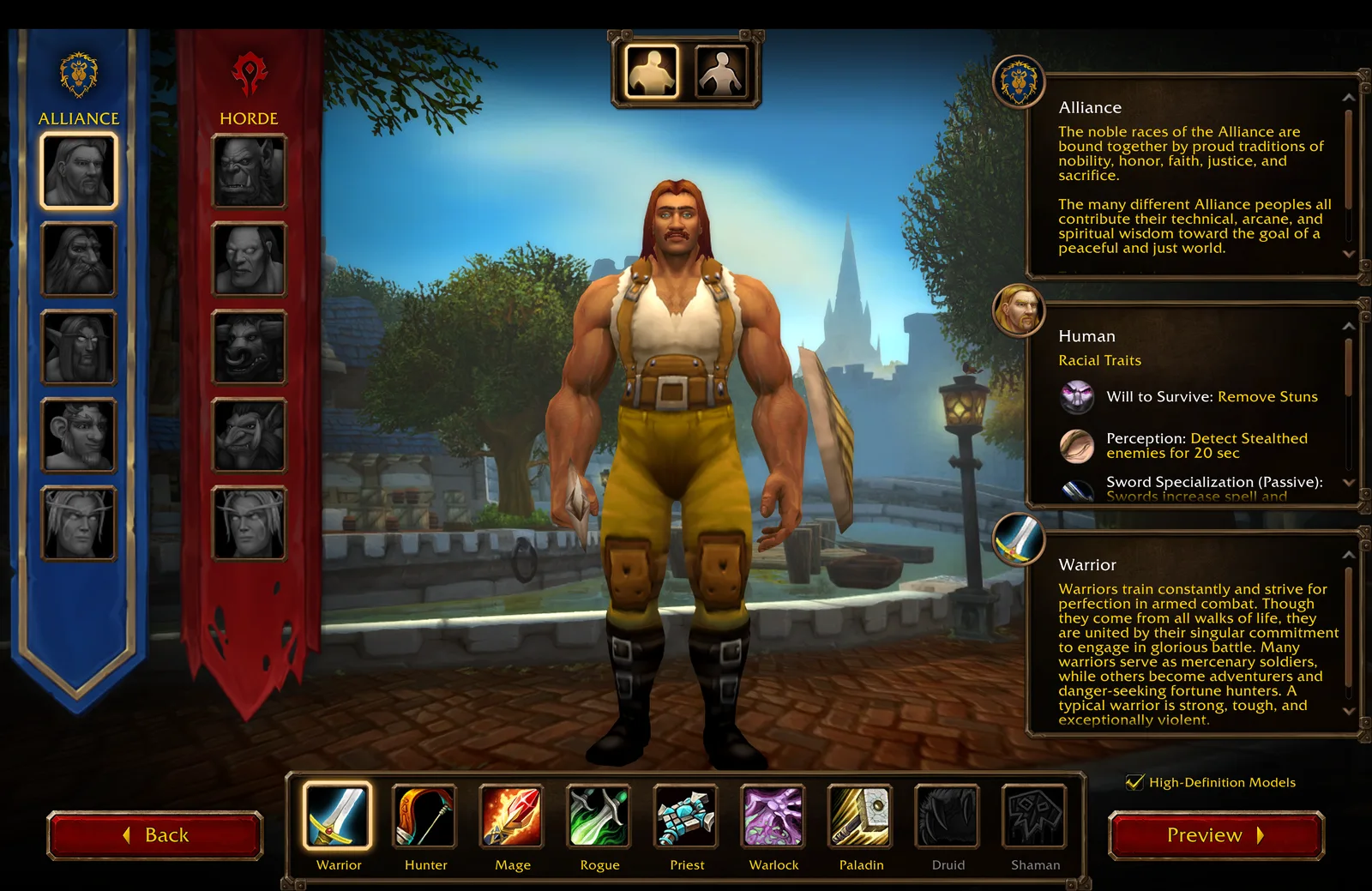
ForeverWisp beta screenshot, 18 September 2026. Game © Blizzard Entertainment.
Choose the character you want to spend your evenings with
If you are torn between a familiar main and something new, start with the fights you enjoy. Do you like managing a pet, sneaking past trouble, keeping friends alive or getting stuck in with a weapon? That choice will shape far more of your levelling journey than a place on an early tier list.
The beta class-choice discussions are full of players having exactly that dilemma. Revised talent trees give returning players a reason to look again. Below is our guide to the different playstyles, with a deeper talent guide for every class.
| You like the idea of… | Start by comparing… |
|---|---|
| Fighting alongside a companion | Hunter and Warlock |
| Stealth and close-range decisions | Rogue and Feral Druid |
| Leading a group from the front | Warrior, Protection Paladin and Bear Druid |
| Keeping the group alive | Priest, Holy Paladin, Restoration Shaman and Restoration Druid |
| Casting damage spells from range | Mage, Warlock, Shadow Priest, Elemental Shaman and Balance Druid |
| Melee combat with support tools | Paladin, Enhancement Shaman and Druid |
Warrior: make the most of your weapon
Choose Warrior if you enjoy close combat, managing Rage and feeling the difference a weapon upgrade makes. Arms leans towards deliberate weapon attacks, Fury offers sustained aggression and Protection gives you a shield-focused direction for group tanking.
In the beta tree, Arms has Bloodthrill, which connects Rend to extra Overpower opportunities. Protection has Vanguard, allowing Charge in Defensive Stance. If that sounds appealing, try Warrior with an eye on when you spend Rage and when you save it for the next useful action.
Paladin: stay in the fight and look after your friends
Paladin is worth a look if you like melee combat but also want healing and protective tools within reach. Retribution, Protection and Holy offer different reasons to bring that toolkit to a group.
The revised trees include support for Holy Strike in Protection and Holy Shock interactions in Holy. Our advice is to decide which job you actually want to do most often. A character built mainly for questing and one built to heal friends can share the class fantasy while making different talent choices.
Hunter: a companion, a bow or a different kind of close combat
Hunter deserves a fresh look even if you already know its Classic version. Beast Mastery supports fighting alongside your pet. Marksmanship includes Lone Wolf for playing without an active pet. Survival has melee-focused additions, including Strider Kick and Lacerating Strikes.
Those directions ask different things of you. Start by deciding whether the pet is part of the appeal, then whether you want to fight at range or up close. A talent calculator can show the destination, but try the available early toolkit before committing to the fantasy of a later unlock.
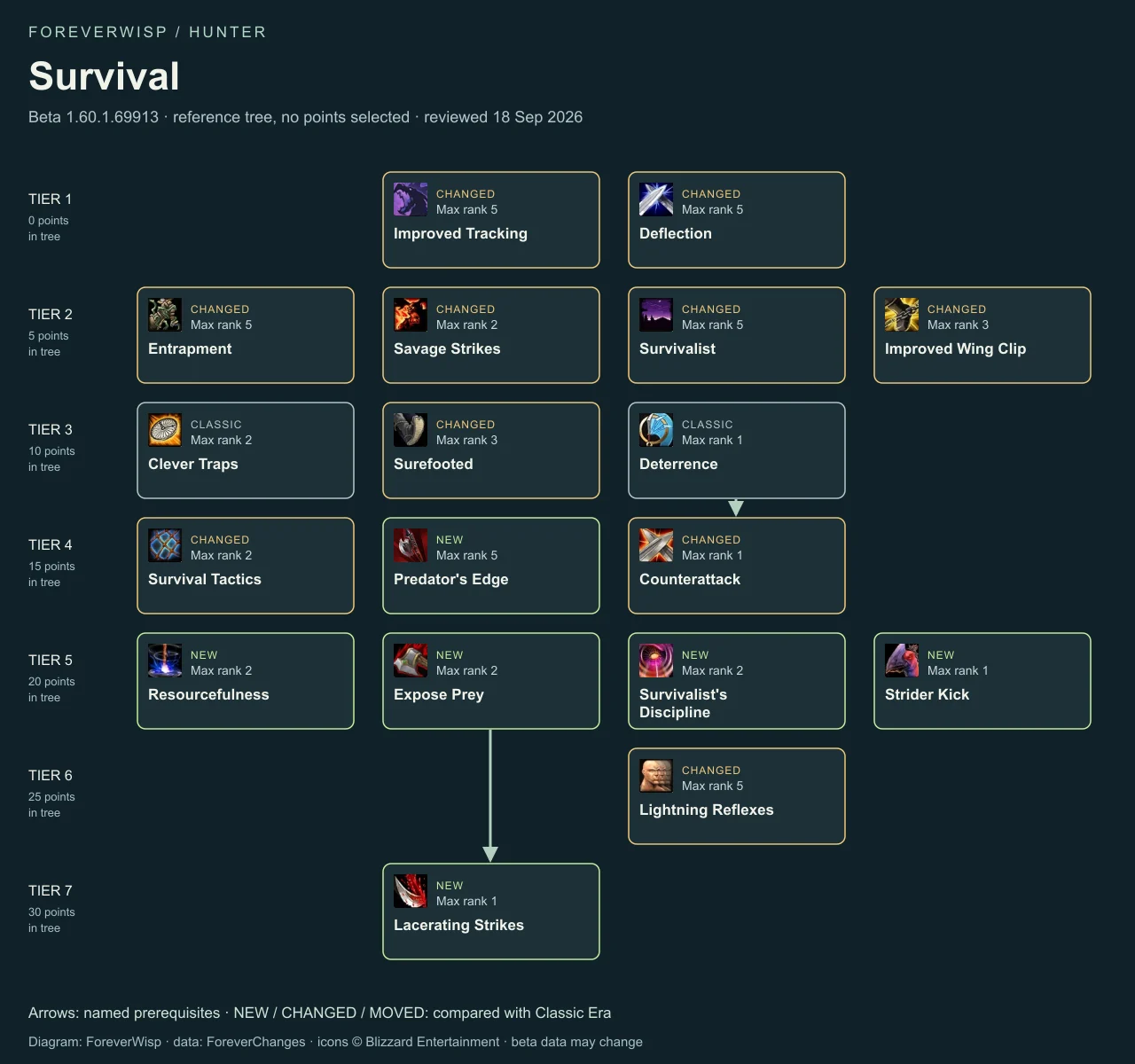
Diagram: ForeverWisp Editorial. Talent icons © Blizzard Entertainment.
Rogue: choose your opening and control the encounter
Rogue suits players who enjoy stealth, choosing when to engage and turning Energy and combo points into a well-timed finish. Assassination, Combat and Subtlety give you different ways to build around that foundation.
Try it if slipping past an awkward pack sounds as satisfying as beating it. Pay attention to whether you enjoy preparing an opening and controlling a troublesome enemy, rather than judging the class only by a quick kill. Our tree guide compares poison, weapon and stealth-focused choices.
Priest: healing, Shadow and a reason to revisit Holy damage
Priest is an obvious candidate if keeping others alive is your favourite part of a group. It also deserves attention from players curious about offensive spell choices. Shadow remains one direction, while the beta Discipline tree includes Power in Light for Holy Fire, Smite and Penance interactions.
Penance can target an enemy or an ally, which makes that branch interesting if flexible spells appeal to you. Treat the Holy damage idea as a playstyle to explore. Its presence in the tree does not tell us how it ranks against other damage builds.
Shaman: bring elemental magic into the group
Shaman gives you a choice between ranged elemental spells, Enhancement melee and Restoration healing, with totems as part of its identity. Choose it if you like paying attention to what your group needs as well as what your target is doing.
The beta Elemental tree includes Lightning Overload and Lava Burst. Those are useful reasons to read the updated tree rather than assume your old point order still fits. If Enhancement attracts you instead, spend your early sessions deciding whether the mix of weapon attacks and spell use feels right.
Mage: pick the spell rhythm you enjoy
Mage suits players who want ranged spellcasting and ways to control an approaching enemy. Frost, Fire and Arcane offer different rhythms. Think about whether you enjoy slowing a pull, landing Fire criticals or managing a sequence of Arcane spells.
Arcane Blast is part of the beta talent tree, with repeated casts increasing its mana cost while preparing a bonus for another damage spell. That makes the decision to switch spells part of the appeal. Try ordinary quest fights as well as a carefully prepared pull, and notice how much recovery your choices need.
Warlock: work with your demon and let damage build
Warlock is a good candidate if you enjoy a companion but prefer curses and spells to a bow. Affliction emphasises ongoing damage, Demonology focuses on the demon relationship and Destruction gives you a more direct offensive direction.
The beta Affliction data includes Bane of Agony and Pandemic support for periodic damage. If maintaining effects and deciding which target gets your next spell sounds satisfying, start there. Also try controlling your demon around nearby enemies. Enjoying that extra layer matters more than liking the look of one damage number.
Druid: leave room to change your mind
Druid is the broadest starting point here if you are drawn to several roles. Balance offers ranged spellcasting, Feral supports Cat and Bear combat, and Restoration takes you towards healing.
That flexibility still comes with choices about equipment and talents. Moonkin Form in the beta data cannot cast healing spells while shifted, so changing roles is an action you take rather than a free extra running in the background. Choose Druid if moving between forms is part of the fun, then build around the role you expect to play most.
Try two classes with the same kind of evening in mind
Narrow your list to two. Give each an ordinary questing session, and a group session if that is how you plan to play. Notice which buttons you look forward to using, whether the recovery breaks bother you and whether you enjoy the role your friends expect you to fill.
Later talents can change the feel of a class, so read the relevant deep dive alongside your early experience. Check the current beta cap before planning a test around a particular unlock. You do not need to choose a launch main from a level-one first impression.
Once you have a favourite, choose professions that give that character something useful to work towards along the way.
A little help with the journey ahead
Wisp is being built for the time between those bigger character decisions. Its in-game panel keeps the next guide step visible, with navigation and support for levelling, professions and attunement guides.
Public downloads are currently paused. Sign up on the addon page for an email when Wisp is available, and take a look at the real beta screenshots while you are there.
Related reading and guides
Sources and review notes
- Beta players discuss which class to main
- ForeverChanges: Warrior talents, beta build 1.60.1.69913
- ForeverChanges: Paladin talents, beta build 1.60.1.69913
- ForeverChanges: Hunter talents, beta build 1.60.1.69913
- ForeverChanges: Rogue talents, beta build 1.60.1.69913
- ForeverChanges: Priest talents, beta build 1.60.1.69913
- ForeverChanges: Shaman talents, beta build 1.60.1.69913
- ForeverChanges: Mage talents, beta build 1.60.1.69913
- ForeverChanges: Warlock talents, beta build 1.60.1.69913
- ForeverChanges: Druid talents, beta build 1.60.1.69913
Reviewed 19 September 2026. Class comparisons use our build 1.60.1.69913 talent guides and the linked beta data. Playstyle recommendations are our interpretation. This is not a tested damage ranking, and later talents may be beyond the current beta cap.